
The Washington Accords Need One Critical Fix to Succeed
By Margaret Miller
The Washington Accords for Peace and Prosperity represent a serious and good-faith effort—by the United States, the Democratic Republic of Congo (DRC), Rwanda and international partners—to stabilize a region that has borne the weight of conflict for far too long. They are ambitious in scope and grounded in a shared interest in peace, security, and economic opportunity. But there is a gap in the agreement that deserves urgent attention. It is not a flaw that undermines the Accords’ intent. It is, however, one that—if left unaddressed—could limit their effectiveness and durability.
Put simply: the Accords do not meaningfully incorporate women.
That omission matters—not only as a question of representation, but as a question of outcomes.
The DRC is not starting from scratch on this issue. Over the past 15 years, Congolese leaders have made real and sustained efforts to integrate the principles of Women, Peace, and Security into national policy. From the adoption of national action plans aligned with UN Security Council Resolution 1325 to the creation of national and provincial implementation bodies, the DRC has built a framework designed to ensure that women are included in peacebuilding and protected in conflict.
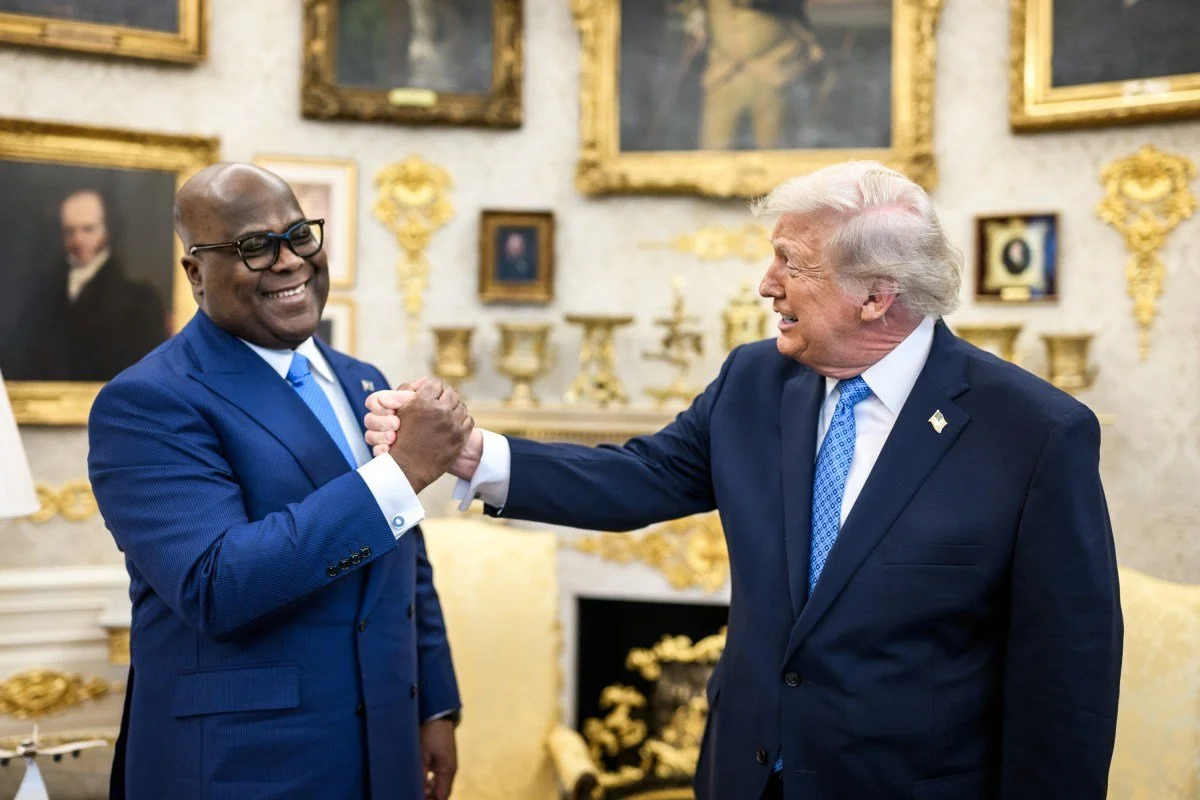
US President Donald Trump meets with President of the Democratic Republic of Congo Felix Tshisekedi
Those efforts reflect both international best practice and local leadership. They also reflect an understanding—borne out by extensive research—that peace agreements are more likely to succeed when women are involved in shaping them.
The Washington Accords, however, do not appear to draw on that existing architecture.
This is not about assigning blame. Negotiations of this complexity are always constrained—by time, by security realities, and by the need to bring multiple parties to the table. The United States and its partners deserve credit for moving the process forward. The DRC deserves recognition for its willingness to engage constructively.
But implementation is where agreements either succeed or stall. And implementation offers an opportunity to strengthen what was left incomplete.
Participation strengthens legitimacy
In 2025, a coalition of Congolese civil society organizations formally requested inclusion in the negotiation process. Their efforts were organized, substantive, and aligned with the very principles the international community has long supported. While their voices were acknowledged, they were not ultimately reflected in the final agreement.
That gap can still be closed.
As the Joint Security Coordination Mechanism begins its work, ensuring that women are included with real decision-making authority would not only align the Accords with established best practices—it would strengthen their legitimacy on the ground. Inclusion is not a symbolic gesture; it is a practical investment in stability.
Protection requires specificity
The Accords rightly emphasize the protection of civilians. But effective protection depends on clear mechanisms and measurable benchmarks. In eastern Congo, conflict-related sexual violence remains a defining feature of insecurity. International organizations, including the United Nations and humanitarian groups, continue to document the scale of the problem and the need for accountability.
Addressing this does not require rewriting the Accords. It requires integrating into their implementation what the international community already recognizes: that protection must include explicit attention to gender-based violence, survivor support, and accountability for perpetrators. Incorporating sex-disaggregated data and clear benchmarks into reporting would provide a more accurate picture of progress—and ensure that protection commitments translate into real outcomes.
Economic inclusion drives sustainable peace
The economic dimension of the Accords is one of their most promising elements. The focus on regional integration and critical minerals has the potential to unlock significant growth.
But growth alone is not enough. Who benefits from that growth matters.
Congolese women play a substantial role in the country’s mining economy, particularly in artisanal sectors. Yet they often remain excluded from the financial gains and lack basic protections. Ensuring that economic frameworks include provisions for equitable participation would not only advance fairness—it would strengthen the overall impact of the Accords by broadening the base of stakeholders invested in their success.
A shared opportunity
None of these steps require revisiting the core agreement. They require building on it—thoughtfully, collaboratively, and with respect for the leadership already shown by both the DRC and the United States. The Accords are a foundation. Like any foundation, their strength depends on how they are reinforced over time.
Closing this gap is not about criticism; it is about alignment. It is about ensuring that the Accords reflect the full range of tools and knowledge available to make peace last.
The United States long has supported the Women, Peace, and Security agenda as a matter of both principle and strategy. The DRC has demonstrated its commitment through concrete national policies and institutions. Bringing those efforts into the implementation of the Washington Accords would be a natural—and necessary—next step.
If done well, it will increase the likelihood that the Accords deliver on their promise: a more stable, prosperous future for the people of the Democratic Republic of Congo.
If left unaddressed, it risks becoming a missed opportunity.
The path forward is clear—and still within reach.
Margaret “Mags” Miller is a TCK (Third Culture Kid) who grew up in Nigeria, Tanzania, and Zimbabwe, shaping her global perspective and human-centered approach to storytelling. A seasoned showrunner, director, and producer with 20+ years of experience, she has led complex productions in 30+ countries, interviewing everyone from heads of state and scientists to gold miners, and coastal fishers. Her work is grounded in clarity, creativity, and a deep respect for the people whose stories she tells. Her recent projects include serving as showrunner for “Protecting Paradise: The Story of Niue” and leading the full media portfolio for Revive Our Ocean, a global initiative supporting coastal communities and marine conservation. Alongside her production work, Mags also serves as a Strategic Communications Consultant for the Diplomatic Studies Foundation (DSF), supporting efforts to strengthen U.S. diplomatic training and global engagement.