
When War Infiltrates the Family Tree
Summary of recent publication by Dr. Eunice Otuko Apio and Professor Sabine Lee
Sexual violence in war does not end with the victim, or even necessarily with her child. Eunice Apio and Sabine Lee's research shows how the consequences of wartime sexual violence can become embedded in the kinship structures through which communities transmit identity, belonging, rights and resources—and can therefore reach into subsequent generations. Find the full text of Apio and Lee’s article at Springer
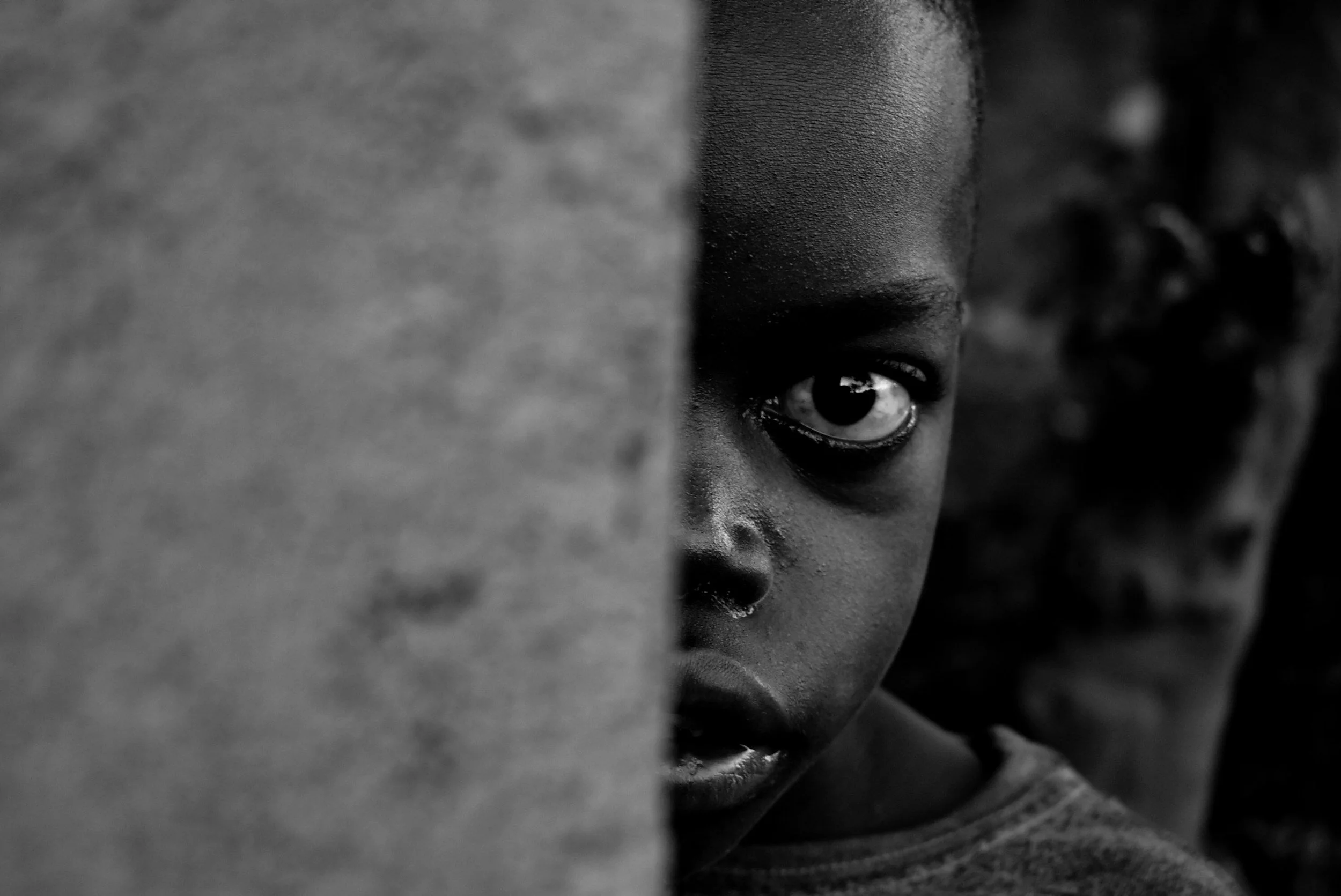
Since the beginning of this century, researchers have paid increasing attention to “children born of war”—children conceived by foreign soldiers during war or occupation, by peacekeepers or child soldiers, and through relationships ranging from consensual relationships to exploitation, forced marriage and rape. Northern Uganda has become one of the most important settings for this research, particularly because of the thousands of women and girls abducted during the long conflict involving the Lord’s Resistance Army (LRA).
Many abducted women and girls were forced to become “wives,” fighters and laborers. Some gave birth in captivity and eventually returned to their home communities with their children. Other women and girls in Northern Uganda suffered abduction and sexual violence during decades of cattle raiding by armed groups from neighboring Karamoja and likewise returned with children.
Previous research has documented the formidable obstacles these mothers and their children encountered upon returning home: rejection, ostracism, discrimination and stigma. But Apio and Lee ask a different question: Why does that stigma persist, and what does it mean within the particular society to which these children return?
Their answer takes the study of conflict-related sexual violence beyond the immediate trauma of the victim and into the social structures through which communities organize themselves across generations.
Generational Time
The key to the study is what Apio and Lee call “generational time.”
Among the Lango people studied by the authors, society is traditionally organized through patrilineal kinship. A person belongs to a lineage extending through fathers, grandfathers and previous generations. Birth does more than add another individual to a family. It establishes a person's place in an intergenerational network of relationships, rights and responsibilities.
That place has practical consequences throughout life. Lineage can determine where a person has a right to live, access to land and inheritance, who bears responsibility for protecting and providing for a child, and how marriage and family obligations are arranged. Birth, marriage and death therefore mark not simply chronological time but a person's location within a continuing family line.
For children conceived in captivity, however, that normal sequence has been broken.
Many do not know their biological fathers. Others know that their fathers were LRA members or Karamojong raiders but cannot trace them or their families. Their conception and birth took place outside the customary marriage and kinship arrangements through which a child would ordinarily acquire a recognized place in a lineage.
Lango culture has mechanisms for incorporating children born outside marriage. A customary process known as luk, for example, can regularize a child's relationship to the father's lineage through negotiations between families. But Apio and Lee find that a peacetime custom designed to resolve births outside marriage cannot readily address children conceived through wartime rape, forced marriage or relationships with armed men whose identities or families may be unknown.
The result can be what the authors describe as a generational “time gap”: the child exists biologically but lacks the recognized position within the lineage that would ordinarily accompany birth.
From Social Stigma to Material Consequences
This insight changes how we understand “stigma.”
For the children interviewed, exclusion was not merely a matter of insults or psychological rejection. It could have concrete consequences for education, housing, land, inheritance and everyday access to family and community resources.
Participants described receiving different treatment from siblings whose fathers were known. Some were denied schooling while other children in the household were educated. Others were denied land to cultivate, rejected by stepfathers or told to seek support from fathers they had never known.
The stigma also appeared in the names imposed upon them. Children associated with Karamojong cattle raiders could be called alok or ojong; those associated with the LRA might be called Kony, after LRA leader Joseph Kony. These labels, the authors argue, do more than insult. They identify the child as belonging somewhere else—as connected to the perpetrator's people rather than fully belonging to the mother's community.
And Then It Passes to the Next Generation
Perhaps the study's most consequential finding is that the effects do not necessarily end with children born in captivity.
Apio and Lee found that the children of those children could inherit the same labels and exclusion. One participant described her own children being called akwar olok—“grandchildren of cattle raiders.” Another reported that her children were identified by neighbors as descendants of the people responsible for the original violence.
The consequences of conflict-related sexual violence had therefore crossed three generations: from the woman subjected to wartime violence, to the child conceived in that conflict, and then to that child's offspring.
This is what makes the concept of generational time so important. If the original child's place in the lineage remains unresolved, the effects can continue when that child becomes an adult and has children. Apio and Lee describe this as a form of “multiple generation disadvantage.”
Fighting Back
Yet Apio and Lee are careful not to portray these children simply as passive victims.
The study documents numerous ways that children born in captivity assert their agency. Some challenge those who insult them. Some seek intervention from community leaders or police. Some draw upon Christian faith and religious leaders. Others leave communities where their origins continually define them and establish lives elsewhere.
These responses matter because they demonstrate that the social effects of wartime violence are not immutable. People negotiate, resist and sometimes reconstruct their place within society.
The study therefore points toward an important lesson for policymakers and practitioners dealing with the aftermath of conflict-related sexual violence. Programs aimed at overcoming “stigma and discrimination” need to understand the local institutions beneath those words. In Northern Uganda, those institutions include family, lineage, marriage, land, inheritance and the intergenerational obligations that determine belonging.
Apio and Lee's research reveals the extraordinary reach of wartime sexual violence. A violent act committed during a conflict can alter not only one woman's life, but her child's place within society and potentially the lives of descendants who were not yet born when the conflict occurred.
Understanding that long shadow—and the social structures through which it is transmitted—is essential to understanding what war does to societies over time. (Find the full text of Apio and Lee’s article at Springer)